CLINICAL BIOMECHANICS • TRANSITION GUIDE

Do Zero-Drop Shoes Help Knee Pain? The Physics, Trade-Offs & 14-Day Transition Plan

Switching from a 10mm–12mm cushioned heel to a dead-flat 0mm shoe isn't magic—it's joint load redistribution. Here is what peer-reviewed patellofemoral biomechanics actually shows, when to pick thin barefoot 0mm vs. cushioned zero-drop, and how to ramp up without irritating your calves.

Section 1 • The Research & Mechanism

Why Removing a Raised Heel Unloads the Patellofemoral Joint

1. 12%–15%+ Lower Patellofemoral Stress (Gait & Posture, 2022)

Controlled biomechanics research by Zhang et al. (2022) in Gait & Posture comparing 15mm, 10mm, 5mm, and 0mm shoe drops found that 10mm–15mm raised heels significantly increase peak knee extension moment (KEM) and patellofemoral joint stress compared with 0mm zero-drop shoes.
2. Meta-Analysis Findings (Br J Sports Med, 2023)

A systematic review and meta-analysis by Kayll et al. (2023) in the British Journal of Sports Medicine confirmed that flat, minimalist footwear produces measurable reductions in peak patellofemoral joint loads compared with conventional supportive footwear.

The Honest Trade-Off: Load Shifts Downward to the Calf & Ankle

Zero-drop footwear doesn't erase gravity—it moves shock absorption from your knee down to your ankle, arch, and calf muscles. That is great news for overworked patellar tendons, but it also explains why switching straight into 10-hour shifts or long runs on day one can trigger temporary calf or Achilles tightness.

Section 2 • Honest Category Comparison

Thin Barefoot 0mm (Whitin / Xero) vs. Cushioned Zero-Drop (Altra) vs. Standard Sneakers

Unlike pure barefoot blogs that pretend cushioned zero-drop shoes don't exist, here is exactly how thin 0mm shoes compare against 25mm–33mm zero-drop runners like the Altra Torin or Lone Peak:

Comparison between Thin 0mm Barefoot shoes, Cushioned 0mm runners, and Traditional 10mm-12mm elevated sneakers
Spec / FactorThin 0mm Wide (Whitin / Xero)Cushioned 0mm (Altra / Topo)Traditional Runner (+10–12mm)
Heel-to-Toe Drop0mm (Dead Flat)0mm (Dead Flat)+10mm to +12mm Raised Wedge
Typical Stack Height~5.5mm–12mm (w/ removable 3mm liner)25mm–33mm (thick EVA foam)28mm–40mm (thick EVA foam)
Lateral Wobble on PavementMinimal — foot anchors like a tripodModerate — soft foam compresses unevenlyHigh — tall foam + raised heel lever
Toe Box GeometryAnatomical Wide SplayFoot-Shaped Wide (Altra / Topo)Tapered / Pinches Big Toe Inward
Calf & Achilles AdaptationHighest — needs 10–14 day ramp-upModerate — still requires gradual break-inNone (keeps Achilles shortened)
Typical Price TierBudget tier (Whitin) to Mid-Boutique (Xero)Triple-digit boutique tierTriple-digit mainstream retail
Best Knee-Relief Use CaseEveryday walking, concrete standing, gym & turf stabilityHigh-mileage road running or acute joint impact sensitivityShort-term softness (increases knee extension moment)

Our take: For everyday walking, standing, gym work, and testing whether 0mm relieves your knees, thin wide shoes like the Whitin W81/W85 Wide (with its ~3mm flat sockliner kept in) eliminate foam wobble at roughly a third of boutique prices. Reserve thick-foam 0mm shoes like Altra for high-mileage asphalt running or acute flare-ups where soft impact absorption matters most.

Section 3 • Calf-Safe Ramp-Up

The 14-Day Zero-Drop Transition Protocol (No Drills Required)

You don't need 20-minute foot workouts or toe spacers for daily walking—just give your calves and Achilles two calm weeks to adapt to sitting flat on the floor:

30–60 minutes per day

Days 1–4 • House & Short Errands

Keep the ~3mm flat sockliner inside

Wear your 0mm shoes for walking the dog, grocery runs, or around the house. Keep your old shoes handy—zero calf strain is the goal.

2–4 hours per day

Days 5–9 • Half-Day Alternation

Keep the flat sockliner in on concrete

Alternate every other day or wear flat shoes for the first half of your workday. Notice how your knees feel climbing stairs compared to your old sneakers.

Full day / 18-hole rounds

Days 10–14+ • Full Everyday Wear

Keep liner in for concrete; remove for max ground feel

Once your calves and Achilles feel relaxed after walks, shift into full-day wear. Only extend into heavy workouts or tournaments after everyday walking feels effortless.

Common Questions on Zero-Drop & Knee Pain

Do zero-drop shoes actually help patellofemoral knee pain?

Controlled gait studies and systematic reviews (such as Kayll et al. in the British Journal of Sports Medicine) show that flat, flexible footwear reduces peak patellofemoral joint reaction forces and knee extension moments compared with conventional supportive shoes. Removing an elevated heel stops pitching the tibia forward under load.

Why do some people get calf or Achilles soreness when switching to zero-drop?

Elevated 10mm–12mm heels offload the ankle by dumping force upward into the knee. When you drop to 0mm, your ankle and calf muscles resume their natural shock-absorbing role. Ramping up over 10–14 days prevents sudden calf or Achilles tightness.

Should I start with thin zero-drop shoes (Whitin / Xero) or cushioned zero-drop (Altra)?

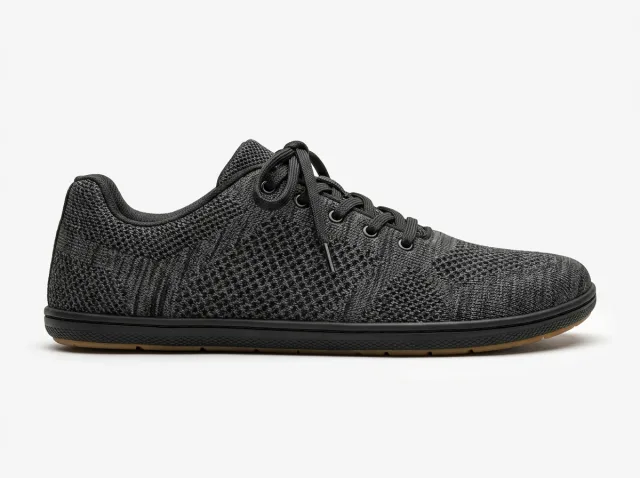
If your priority is everyday walking, standing stability, or testing 0mm mechanics affordably, start with a thin wide-toe-box shoe like the Whitin W81/W85 Wide Knit with its flat 3mm sockliner left in. If you run high road mileage or have severe acute joint sensitivity on asphalt, a cushioned 0mm shoe like the Altra Torin offers extra foam while still eliminating the heel drop.

When should I talk to a doctor or physical therapist first?

If you have acute swelling, locking, meniscus tears, recent knee surgery, diabetic neuropathy, or structural foot deformities, consult a physical therapist or sports podiatrist before changing footwear.

Match Your Daily Surface

Pick Your Best 0mm Wide-Toe-Box Pair

Step 1: Select Fit
Step 2: Where Will You Wear Them Most?
Your #1 Match for Men's Walking, Concrete & GymBudget tier on Amazon
Whitin Men's W81 Wide Knit in 0mm Zero-Drop

The Everyday Knit

Whitin Men's W81 Wide Knit

Verified Specs: 0mm (Dead Flat) • ~8mm–10mm (w/ 3mm removable sockliner) • 360° Torsionally Flexible

A breathable 0mm flat sole with wide toe splay and flexible ground feel—built to take shear load off your patellar tendon on concrete, daily walks, and gym sessions.

Important on Amazon: Select "Wide" in the size dropdown (e.g., 10 Wide) to get the anatomical toe box.

Opens Amazon • Check today's price • Free returns if the wide toe box isn't for you